Archives
- 2026-10
- 2026-09
- 2026-08
- 2026-07
- 2026-06
- 2026-05
- 2026-04
- 2026-03
- 2026-02
- 2026-01
- 2025-12
- 2025-11
- 2025-10
- 2025-09
- 2025-03
- 2025-02
- 2025-01
- 2024-12
- 2024-11
- 2024-10
- 2024-09
- 2024-08
- 2024-07
- 2024-06
- 2024-05
- 2024-04
- 2024-03
- 2024-02
- 2024-01
- 2023-12
- 2023-11
- 2023-10
- 2023-09
- 2023-08
- 2023-07
- 2023-06
- 2023-05
- 2023-04
- 2023-03
- 2023-02
- 2023-01
- 2022-12
- 2022-11
- 2022-10
- 2022-09
- 2022-08
- 2022-07
- 2022-06
- 2022-05
- 2022-04
- 2022-03
- 2022-02
- 2022-01
-
The only psychostimulant treatment option in Turkey is
2024-10-23
The only psychostimulant treatment option in Turkey is methylphenidate (Çetin et al., 2015). It is broken down by carboxylase enzyme (CES1) (Sun et al., 2004). From the point of pharmacokinetics, it may be suggested that CES1 gene polymorphisms may be the key responsible factors in patients resistan
-
br Endoplasmic reticulum protein ERp binds
2024-10-23
Endoplasmic reticulum protein 46 (ERp46) binds to AdipoR1 in HeLa cells ERp46 is localized in the ER and is suggested to act as a chaperone. About 20% of endogenous ERp46 are found at the plasma membrane suggesting that this protein may have additional functions. ERp46 interacts with what is a dn
-
Preclinical models indicate roles for adiponectin in
2024-10-23
Preclinical models indicate roles for adiponectin in the maintenance of hepatic lipid metabolism. Adiponectin overexpression prevents accumulation of triglycerides or the deleterious lipid metabolites diacylglycerols or ceramides [5,8]. Direct manipulation of adiponectin expression demonstrates a po
-
Pioneering studies on the immunomodulatory
2024-10-23
Pioneering studies on the immunomodulatory role of adenosine date back to the early ‘70 s of last century (Fig. 1), when the critical role of this nucleoside in shaping the development and the activity of several immune cell populations was first established [[18], [19], [20], [21], [22]]. This then
-
All consecutive patients who were
2024-10-23
All consecutive patients who were confirmatively diagnosed with MP-PPE and TPE, respectively, between January 2008 and December 2016 at Kyungpook National University Hospital, a tertiary referral hospital in South Korea, an area with an intermediate prevalence of active tuberculosis, were enrolled.
-
Encouraged by this observation a
2024-10-23
Encouraged by this observation, a systematic SAR study on the A ring -alkoxy was conducted as summarized in . The A ring methoxy-containing KRCA-0008 was proven an optimal substituent in terms of potency after all and its bigger size derivatives were detrimental in both biochemical and H3122 cellula
-
Derivatives of M that possess
2024-10-23
Derivatives of (+)-M100907 that possess either an alkyne or an azide have been synthesized. The most active enantiomer was obtained by resolution of a relatively early intermediate in the synthesis. The ability of these Cinacalcet sale to maintain 5-HTR antagonist properties as (+)-M100907 was demo
-
Autophagy is a highly conservative intracellular
2024-10-23
Autophagy is a highly conservative intracellular bulk degradation process including three major forms namely microautophagy, chaperone-mediated autophagy and macroautophagy. A large number of evidence has depicted a pivotal role for autophagy in the maintenance of cardiac geometry and contractile fu
-
The use of FTAI can overcome the negative impact of
2024-10-22
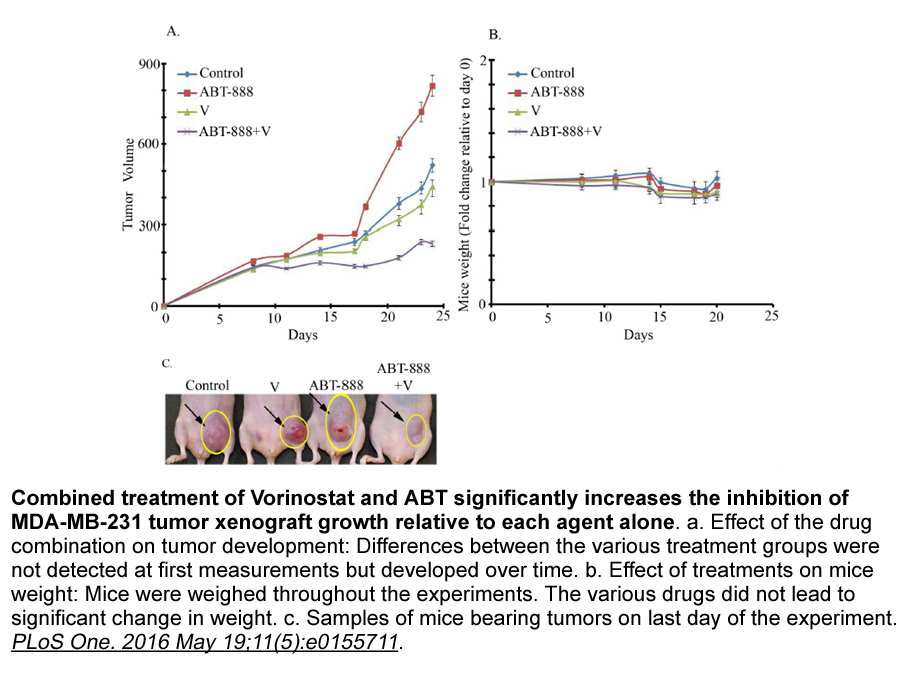
The use of FTAI can overcome the negative impact of low estrus detection efficiency, but implies effective synchrony of luteal function as well as synchronous growth and ovulation of a viable OU749 follicle. Pregnancy rates obtained with FTAI may be comparable or better than those obtained after AI
-
Furthermore we also found that
2024-10-22
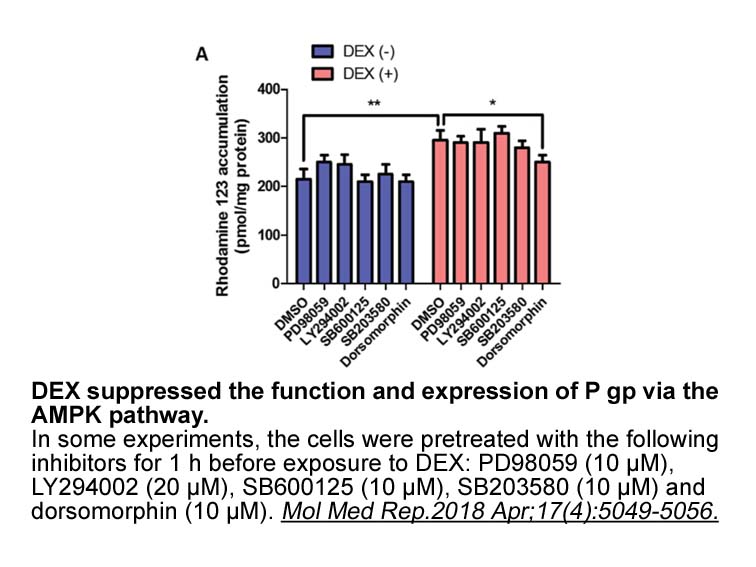
Furthermore, we also found that the basic level of ROS was markedly lower in mtDNA-reduced SW480 estrone than that in the parent cells. Endogenous ROS is most notably produced at the sites of complex I and complex III [5], it might be plausible that the decreased quantity of ROS observed in mtDNA-r
-
br Conclusions br Acknowledgements We
2024-10-22
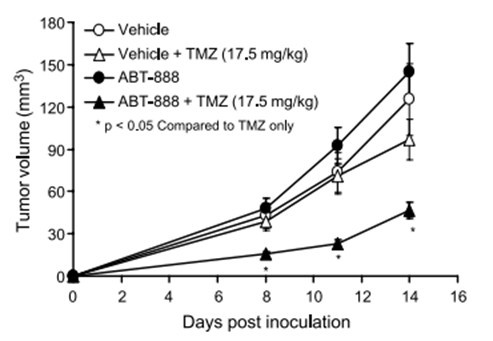
Conclusions Acknowledgements We would like to thank the members of the Bergmann lab for fruitful discussions in the course of this work. This work was supported by the National Institute of General Medical Sciences (NIGMS) under award number R35 GM118330. The content is solely the responsibili
-
br Materials and methods br Results A first
2024-10-22
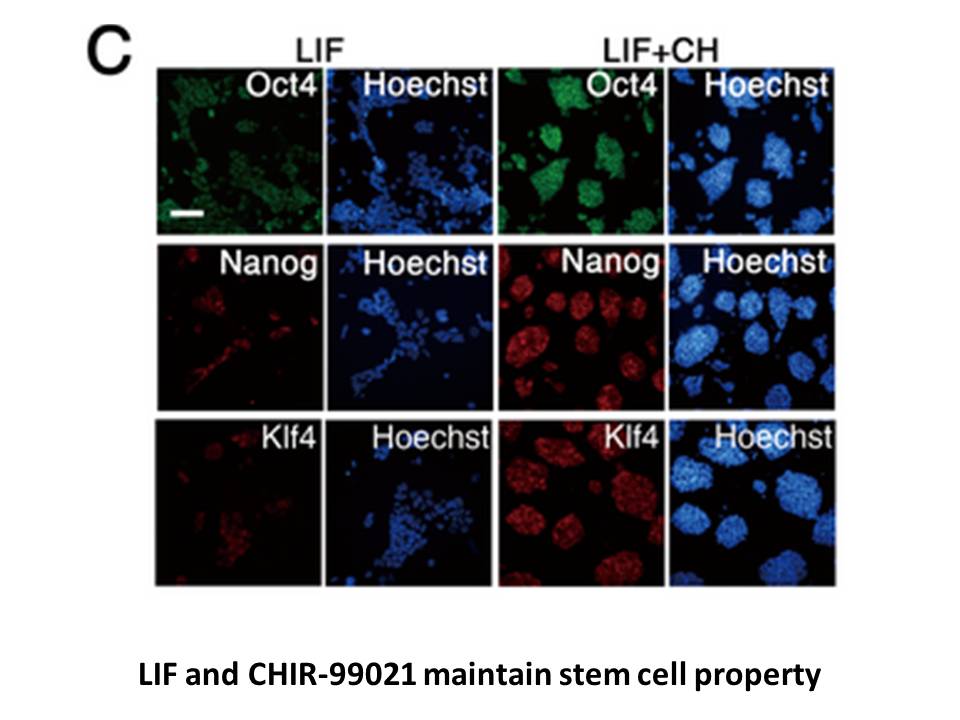
Materials and methods Results A first series of experiments explored whether the Ampkα1 isoform is involved in the regulation of cardiac Pkcζ. To this end, HL-1 cardiomyocytes were transfected with a construct encoding constitutively active Prkaa1T183D (CAα1) or with the empty vector as contro
-
br Acknowledgements This study was funded
2024-10-22

Acknowledgements This study was funded the Irish Department of Agriculture, Food and the Marine through the research program FIRM/RSF/CoFoRD (Reference: 13 F 462). The authors declare no conflict of interest. Introduction Radiotherapy (RT) is one of the major treatment methods among patients
-
The reception of antiangiogenic treatment in neuro oncology
2024-10-22
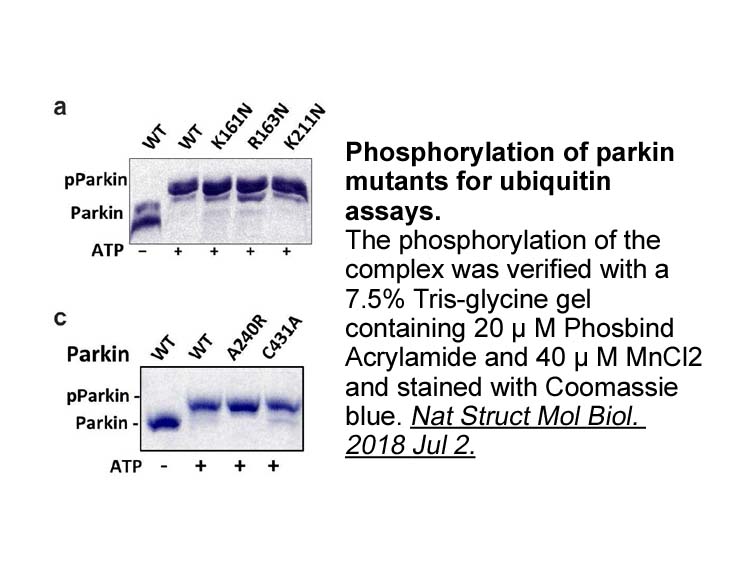
The reception of antiangiogenic treatment in neuro-oncology has yet to achieve the wide success rapidly accomplished for other malignancies. In 1984, mutated receptor tyrosine kinase became a culprit for aberrant tumorigenesis signal, providing a target for monoclonal tetracycline hcl (mAbs) and sm
-
AG-221 mg br Methods br Results br Discussion
2024-10-22
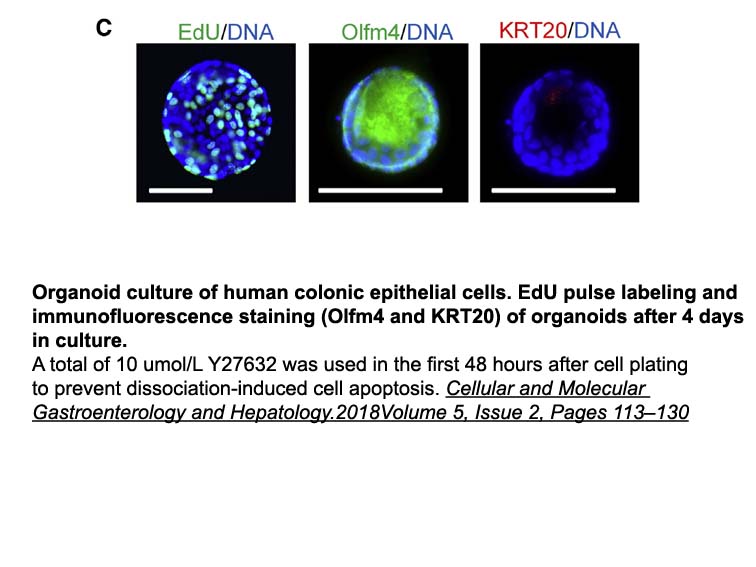
Methods Results Discussion By following a large cohort of older persons for up to 11 years, we found that subjects with more degraded FR in motor activity (i.e., weaker temporal activity correlations at time scales AG-221 mg pathologies affect diverse clinical phenotypes and are related to
8538 records 100/570 page Previous Next First page 上5页 96979899100 下5页 Last page